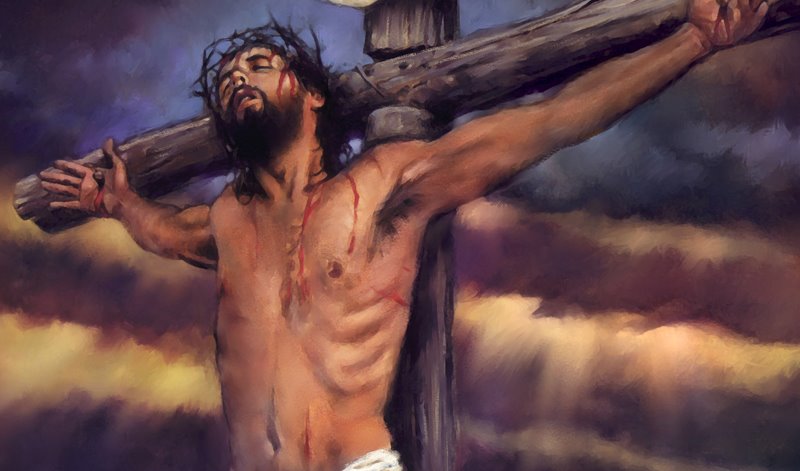
Off the top of my head (the book might mention some or all of these, but these are my own thoughts here, not a summary of Boyer's approach), what we commonly call religion usually incorporates some or all of the following:
- superstitions - belief in supernatural forces or beings, like god(s), angels, voodoo, ghosts, ancestor spirits, reincarnation
- culture - ritual, literature, art, music, food
- ethics - a system of morals, right/wrong, laws, punishments
- explanation of the unknown - creation myths, afterlife (heaven and hell), cosmology, medicine, hygiene
- politics - social hierarchies, governments, taxes/tithes, compromises, wars
- sexuality - gender roles, rules about sexual behavior, marriage/reproductive practices
Looking at the religion I'm most familiar with, modern Catholicism, that framework might look a bit like this:
- superstitions - belief in an all-knowing and all-powerful deity who hears our thoughts and words, belief in a virgin birth and resurrection of a dead man
- culture - large cathedrals, stained glass, hymns, Sunday gatherings, Easter and Christmas holy days, self-loathing
- ethics - 10 commandments, "do unto others", anti-abortion, anti-stem cell research
- explanation of the unknown - Creation myth as allegory, Afterlife based on earthly merits, scattered belief in miracles and haunting, otherwise fairly extensive embrace of science
- politics - Vatican, rankings: pope/cardinals/bishops/priests/others, lots of money and political power, abuse of authority (sex scandals)
- sexuality -male priests, taboo on sex outside of marriage, anti-homosexuality, encourage reproduction, discourage birth control
But someone deeply indoctrinated in their religion could never see it that way, because for them their religion is actually their understanding of reality. They don't see their belief in a god as a superstition, a cute anthropological oddity. To them, their god is reality. He exists just as much as you or I do. There is no attempt to explain the unknown in their religion, because the Bible explains how the earth was made, so it isn't an unknown. They haven't made decisions about sexual behavior in any strategic way (to make more baby Catholics, for example), they're living the only appropriate way and anyone who does it another way is just wrong.
People operate as if reality is a subjective thing and anyone's opinion is just as valid as anyone else's. What do I mean by "valid" in that context? Well, especially in America, we've got this attitude that basically says "I can believe whatever I want and that's my right, so screw you if you disagree." And if people think that way, there's probably nothing that could change their minds. But that doesn't mean their beliefs are reflective of reality. Reality isn't subjective, even if our perceptions of it are. Religious beliefs might be valid in the sense that people have a right to their own mind, but they aren't valid as an accurate understanding of how the world really is.
An example of this whole relativist approach, and something that annoys me is when a person of faith engages an atheist in debate and makes the claim that atheism is just another religion (like in the comments here). Aside from usually being irrelevant, it just doesn't make any sense to me. What would be the Atheist religion, broken down like I just did for Catholicism?
- superstitions - none, by definition atheists don't believe in god(s)
- culture - there is no atheist culture, they blend into their local cultures and just avoid the religious aspects
- ethics - there is no set of ethics that all atheists follow, but most have a strong sense of secular ethics
- explanation of the unknown - most would say to use the scientific methods to solve mysteries
- politics - no organization, just a strong support for the separation of church and state
- sexuality -no unified stance, although there is a tendency towards support individual sexual freedom and rights
After being rebuffed, they'll usually say something like the guy in that link:
First of all there IS a difference between saying "I don't believe in God" and saying "I believe there isn't a God." Atheists don't necessarily "BELIEVE in the evidence against the existence of God," rather they don't believe there is evidence for God. It is a burden of proof issue.Let me make it clear, that I did not mean that atheism is a religion by definition. Call it a belief, call it whatever you like, but don't ignore the fact that every time you relate to something, it is because of your personal belief system.
According to dictionary dot com, atheism is, a "disbelief in or denial of the existence of God or gods". When you disbelieve something, that means you BELIEVE IN something ELSE.
YOU believe in atheism, you BELIEVE in the evidence againsts the existencence of God, how are people who believe IN God any different?
Regardless, even if we ignore all that and get to his question - what makes atheists and believers different? Evidence does. Logic does. Commitment to reality makes us different. We go out in the world and figure out what is real. Believers make up a story or read something in an old book and accept it without testing it against reality.
He goes on to answer his own question in his own way:
He's basically saying that because people will always disagree, that means all views are equally valid, which is just relativistic nonsense. In some disagreements there is a wrong side.Well I can answer my own question. They differ because their views don't agree with yours. You can't accept the idea that people believe in something else. So what does it make people like YOU then?
No matter what you believe, there is somebody out there who would be considered an "atheist" to you, a non-believer.
Some people just literally don't understand reality. They are incapable of logical thinking, either because of limited cognitive ability, or because they've been so brainwashed by decades of relativistic and anti-science propaganda that they just aren't able to see reality.
I acknowledge that it is possible that it is I who can't understand reality and I've got the limited cognitive ability. Maybe the right way to understand truth is by ignoring what I swhollyd wholy embracing dogma. But I'll never believe that. I don't even have need of the concept of "belief" because I don't really form definite conclusions. I just have tentative ideas that seem to work well in predicting what is going to happen.
It is 3:30am and I've been writing for almost 2 hours now. I'm not sure if I made a coherent point overall, but I've touched on a lot of topics that I've been wanting to address. I'd welcome intelligent feedback on any of it. By the way if you click that book link and buy it, I get 4% of the price I think, which would feed me for an hour.